 Shipping Tips


The past year rewrote the rules of international shipping. Tariffs moved from the back office to the front page. De minimis became a dinner-table word. And consumers—who once simply wanted their orders to arrive on time—started asking harder questions about what they'd actually pay at the door.
For Brian Dunagan, Senior Director of Strategic Partnerships at GlobalPost, the shift isn't really about policy. It's about trust. At the Manifest supply chain conference this year, Dunagan sat down with the Outside the Box with Asendia USA podcast to unpack what 2025 taught the industry—and what the winners in 2026 will do differently.
His argument was simple: international shipping isn't a logistics problem anymore. It's a product design problem.
Tariffs have existed for as long as global trade has. What changed in 2025 was their visibility. Consumers began receiving unexpected invoices after their packages arrived, and the friction moved from the back end to the customer's living room. The emotional response was swift.
"About 48% of consumers abandon the cart when they don't feel like the price is transparent."
—Amanda Meadows, Director of Partnerships, Asendia USA
Cart abandonment at that scale reframes the problem. Customers aren't walking away because shipping costs too much. They're walking away because they don't know what shipping will cost. A duty paid at checkout feels like part of the deal. A duty charged at the door feels like a mistake—and unpredictability erodes trust faster than any price point ever could.
There's a common assumption that customer experience lives at checkout, or maybe at the doorstep. Dunagan disagreed. For international orders, he argued, the most consequential customer moment happens earlier—at label creation.
This is where compliance rules, duties and taxes, and delivery expectations collide. Errors or ambiguity at this step don't just cause operational delays. They create broken promises. A shipment mislabeled or a duty miscalculated becomes a customer service ticket, a negative review, or a lost lifetime customer.
The implication: shipping teams are designing the customer experience whether they realize it or not. Every decision about carriers, duty handling, and documentation shapes what arrives—and how the recipient feels when it does.
Modern international shipping can be extraordinarily complex. Customs documentation, country-specific regulations, duty calculations, and tax thresholds vary by destination and shift constantly. The question isn't whether complexity exists. The question is who bears it.
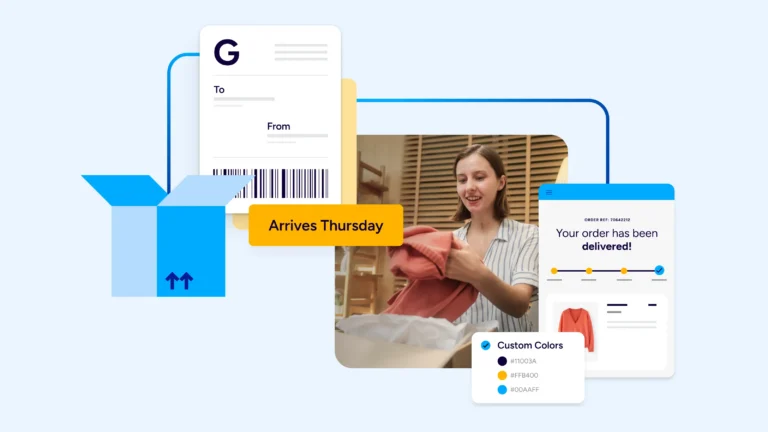
GlobalPost's approach is to take it on. Through Delivered Duty Paid (DDP) options and the newly launched GlobalPost Plus - Duties & Taxes Included, where duties and taxes are calculated and shown at label creation—not billed after the fact. Streamlined customs forms–no more printing paperwork.Compliance decisions happen upstream, inside a team built for them. With coverage across 25+countries and parcel protection up to $200, the infrastructure is there; the real unlock is the experience it enables.
"If you don't have the right shipping process as part of that, you're going to have customers not purchase it."
—Brian Dunagan, Senior Director of Strategic Partnerships, GlobalPost
That's the throughline Dunagan returned to: a strong product, a clean UX, and a frictionless checkout will still lose customers if shipping introduces surprise. Shipping has to be factored into product design, not bolted on at the end.
The brands that scale internationally in 2026 won't necessarily be the fastest or the cheapest. They'll be the clearest. Predictability will beat optimization. Transparency will beat speed. And intentional design will beat patchwork workarounds.
That's true for merchants of every size. A small shop selling to 10 countries needs the same clarity at the label as an enterprise brand shipping to 100. The merchants still treating international as an experiment—piecing together carriers and hoping for the best—will find the friction catching up to them.
"How do we demystify international, make it easy for people?"
—Brian Dunagan, Senior Director of Strategic Partnerships, GlobalPost
That question drives GlobalPost's product roadmap. It's also the question every brand selling cross-border should be asking itself.
The biggest reframe from Dunagan's conversation is also the simplest. International shipping isn't an operational line item. It's part of the product experience. Every surprise it creates is a surprise the brand created. Every moment of clarity it delivers is a moment the brand earned.
Complexity isn't going away. The winning brands in 2026 will be the ones who absorb it on behalf of their customers—and make the global feel as simple as the local.
Stop losing carts to surprise fees. Learn how GlobalPost Plus - Duties & Taxes Included shows duties and taxes at label creation on ShipStation and ShipStation API—so your customers never get a bill at the door.