 Shipping Tips


When was the last time a customer touched your brand? Really touched it—held it, opened it, felt it? The answer, for most ecommerce businesses, is the delivery. Just the delivery.
And yet most retail operations still treat delivery like a back-office function—something to hand off, minimize, and hope for the best. At The Delivery Conference 2026, a room full of retail and logistics leaders made a compelling case that this mindset is quietly killing retention. The international ecommerce delivery experience, they argued, isn't a cost center. It's the point.
This article shares insights from expert-backed sessions on ecommerce delivery, AI, sustainability, logistics, and more at The Delivery Conference 2026. Watch all of the event sessions on-demand.
Chris Forbes, co-founder of Cheeky Panda, put it plainly in the Delivery That Delivers session.
"You've really got to focus on not having a leaky bucket,” Forbes said. “If you're working really hard to get your customers, you've got to have retention—and retention is about delivery and customer experience."
That metaphor is worth sitting with. Retailers collectively spend enormous sums on acquisition: paid social, SEO, influencer partnerships, promotions. But every poor delivery experience—a late package, a silent carrier, a frustrating return—punches a hole in the bottom of the bucket. You pour more in; it keeps leaking out.
Kristian Tottmar, strategic network lead at H&M, made a similar point about organizational design. Delivery doesn't fail because of bad carriers. It fails because it gets siloed.
"Deliver fulfillment—it is not only a logistic question," Totmer said. "It needs to be anchored, strongly, to your brand and company strategy."
What he's describing is a company-wide posture shift. Not a logistics upgrade. Not a carrier swap. A fundamental change in how delivery gets treated inside the org—who owns it, who it reports to, what it's measured against.
Here's the finding that surprised people in the room most: customers don't actually need their packages faster. They need to believe the package is going to show up.
Krieger was direct about it.
"People are really all about trust and certainty," he said. "They don't necessarily mind if things aren't as optimal as they could be—as long as they trust what you're telling them is actually going to happen and that the path is still acceptable."
Alan Mullen, senior customer service manager at Superdry, had the living proof. During the Smart Costing session, he described a peak period when thousands of Superdry orders were stuck at customs. His team braced for an inbox crisis. What they found instead: when customers were proactively updated with clear timelines, the flood of support contacts didn't come. Customers who knew what was happening didn't need to ask.
"Customers don't expect things to be perfect, but they expect you to update them when things go wrong." - Alan Mullen, Superdry (Smart Costing)
Jade Roberts, general manager of customer experience at Monica Vinader, had taken this principle further than almost anyone else on the stage. During the Make Delivery Your Advantage session, she described a system her team built: whenever a parcel was predicted to arrive late, an email went out before the customer had any idea there was a problem. The delivery charge was automatically refunded. The estimated arrival was updated. A personal concierge from customer care was assigned to see the order through.
"What we're telling you at that point is your parcel's going to be late," Roberts said. "But we're doing everything we can to make sure you don't have to contact us."
The result was higher NPS scores across every carrier they initially tested it with. Some customers wrote back to say thank you—for a delivery that was running behind.
That's the counterintuitive heart of this: a late delivery, handled well, can strengthen the customer relationship more than a delivery that arrived on time and was never acknowledged. The post-purchase window isn't dead space. It's an opportunity.
There's a reason retailers who understand all of this still struggle to execute it consistently. The operational overhead is real.
DDP service offerings built for the way you actually ship. GlobalPost's DDP options—Go, Plus, and Plus - Duties & Taxes Included—give you control over how landed costs are handled before they arrive on the doorstep. Instead of leaving customers to face unexpected fees at delivery, you can price duties and taxes at checkout and ship with confidence that what your customer paid is what they owe. That kind of transparency doesn't just protect the customer experience—it removes a whole category of post-delivery friction from your support queue.
Hassle-free international shipping, from label to doorstep. Customs documentation is one of the quieter drains on fulfillment time—not dramatic enough to escalate, persistent enough to compound. GlobalPost reduces that burden by helping customers complete customs details accurately, without requiring your team to start from scratch on every cross-border shipment. Add address verification and concierge support into the mix, and what used to be a source of "where's my order?" tickets becomes a more predictable, lower-touch process.
The goal of all of it is the same: more bandwidth for the work that actually requires a human. That's what makes the strategic international ecommerce delivery experience possible in the first place—getting the operational layer out of the way.
Mullen offered a parting thought during Smart Costing that was hard to shake.
"Within the next couple of years, people are going to have their own bots," he said. "We're gonna have bots talking to our own AI—and the customer world is going to change as well."
He's describing a near future in which the international ecommerce delivery experience is negotiated between systems—where a customer's AI agent checks your shipping options, reviews your return policy, compares them to a competitor's, and makes a recommendation before the customer has typed a single thing. The brands positioned to win in that environment are the ones who have already built delivery into their strategy, not as a cost to be managed but as a differentiator to be designed.
The merchants at TDC 2026 aren't waiting. The leaky bucket is real, the evidence is overwhelming, and the tools to fix it exist. The question is just whether you're going to treat your next shipment like a transaction—or like a relationship.
A quick gut check. You're in good shape if...
Delivery is a company-wide conversation. Your ops, marketing, and customer experience teams are aligned on what a good delivery experience looks like—and what it costs when it goes wrong.
You're using DDP to take the surprise out of international orders. When duties and taxes are calculated and communicated upfront, your customers aren't hit with unexpected fees at the door—and your team isn't fielding the fallout.
You're proactive, not reactive. When something goes wrong, your customer knows before they have to ask. You're not waiting for the "where's my order?" email.
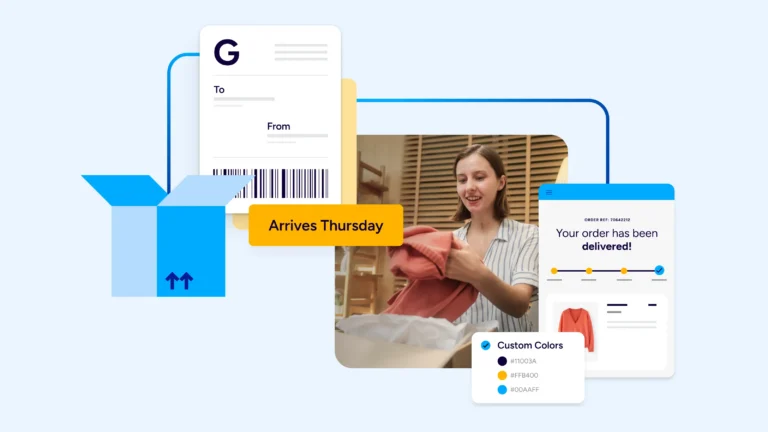
Your post-purchase window feels like your brand. The tracking page, the notification emails, the returns flow—they look and feel like you, not a carrier.
Your team isn't doing things a system could do. Carrier service decisions, customs documentation, label details—if these are still manual, that's time and money that could go elsewhere.
You're measuring what matters. You're not just tracking on-time delivery rate. You're looking at NPS, repeat purchase rate, and post-delivery contact volume—the signals that tell you how the relationship is holding up.
If most of those are yes, you're ahead of the curve. If a few gave you pause, that's where the opportunity is.
Every shipment is a chance to build the relationship. GlobalPost gives you the tools to make it count. Talk to our team to get started.