 News
News


Two EU changes are reshaping cross-border shipping this year. One decides what you pay. The other decides whether your parcel gets through.
The first took effect July 1, when the EU ended its de minimis exemption and added a flat €3 duty on low-value B2C shipments. The second arrives November 1: every B2C shipment to the EU, at any value, needs product identifiers (PIDs) for each item. Here's what to know about both, and how to set up your EU shipping so neither slows you down.
Every EU-bound parcel now raises a question: who covers duties and taxes?
With Delivered Duty Unpaid (DDU), your customer pays at delivery. That means a charge request before they can collect the package. Now that a duty applies to nearly every low-value B2C shipment, those requests show up more often. Some customers refuse the parcel, and it comes back to you.
With Delivered Duty Paid (DDP), you cover duties and taxes, and your customer pays nothing at the door. Not sure which fits your business? The DDP vs. DDU guide breaks down the tradeoffs.
GlobalPost offers two ways to ship DDP to the EU:
GlobalPost Plus is a DDP solution where you pay taxes after the shipment ships, via a post shipment billing adjustment. Your customer gets a smooth delivery, and you settle up afterward.
GlobalPost Plus Duties and Taxes Included is a fully landed solution, available to select countries. You pay duties and taxes when you buy the label, so your costs are settled before the parcel leaves.
Both keep surprise fees away from your customer, and both work best when your shipment data is complete. That's where the November 1 PID rule comes in.
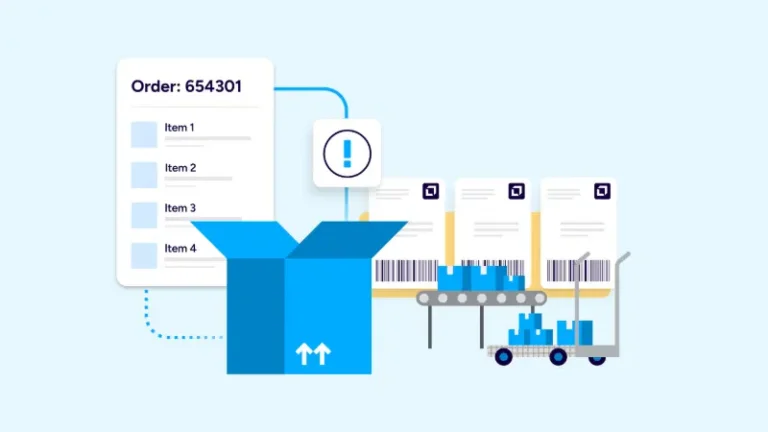
From November 1, EU customs requires PIDs for every item in a B2C shipment. A parcel worth 10 euros needs them. So does one worth 10,000. The €3 duty only applies below €150, but the PID rule has no ceiling.
Each item needs two of three identifiers. Here's how they break down:
M-PID (Merchant Product ID): always required. This is your own product identifier, usually your SKU.
S-PID (Standardized Product ID): required when one exists. It's a globally recognized manufacturer product identifier such as a GTIN, EAN, UPC, or ISBN. Most branded and retail products already have one. This is required only where it exists.
NS-PID (Non-Standardized Product ID): the fallback when there's no S-PID. Picture a seller who makes custom, hand-knit sweaters and sells them on Shopify. There's no manufacturer code to look up, so an NS-PID fills the gap. If you are the maker of the sold goods, your internal product identifier or model number would be provided in this required field. It can look a lot like your SKU, but it must be unique. For example, if your SKU is 1254839, your NS-PID might be 1254839A.
In short: every item needs an M-PID, plus an S-PID if it has one, or an NS-PID if it doesn't.
Most product catalogs weren't built for this level of detail, and the gaps tend to show up in the same places.
Style-level identifiers. PIDs must be set per variant. A t-shirt in three colors and four sizes is 12 distinct products, and each needs its own set. One ID for the whole style won't clear.
Batch and lot codes. Customs rejects identifiers set at the batch or lot level. These are common in warehouse systems, so they're easy to reuse by mistake.
Missing S-PIDs on resold goods. If you sell other brands' products, the barcode data may not be in your catalog yet. Pulling it together can take time, so start early.
PIDs have been accepted on a voluntary basis since July 1, with no penalty for shipping without them. That gives you a free test window.
Enter your product data now, run a few real EU shipments, and see what comes back. Gaps you find today cost you nothing. The same gaps in November could mean held or rejected parcels.
A few weeks is enough if you start now.
A few related details are still being finalized on the EU's end. This guidance will be updated once they're confirmed.
Sellers who treat November 1 as a data project, not a last-minute form, will clear customs with the least friction. Get your EU shipments ready for what's next. Start with GlobalPost today.
Disclaimer: This is not legal or tax advice and is not a guarantee of customs clearance outcomes, duty amounts, or fees. Please consult your advisors for guidance specific to your business.